Source Double Tier Detachable Fruit Basket for Kitchen, Living Room, Office
Compare 30 listings for the double tier detachable fruit basket, featuring metal construction and customizable designs for kitchen, living room, and office storage. Buyers can review dimensions, surface finishes, and MOQs to find suitable suppliers.
Key considerations
Products List
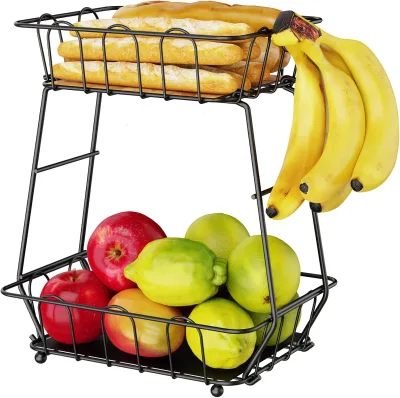


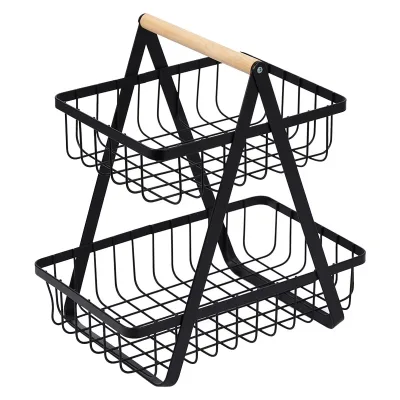


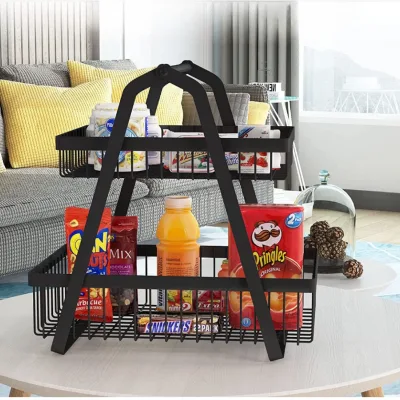


Comprehensive Sourcing Guide
Strategic Sourcing Guide for Double Tier Detachable Fruit Baskets
Understanding Product Architecture and Functional Design
The double tier detachable fruit basket represents a specialized category within the broader storage and organization market, designed to maximize vertical space while maintaining aesthetic appeal. In the context of B2B procurement, the core value proposition lies in the "detachable" mechanism, which allows for modular assembly, simplified shipping, and flexible storage configurations. Buyers must recognize that this product is not merely a container but a multifunctional unit intended for diverse environments ranging from commercial kitchens to residential living rooms. The observed product attributes indicate a strong emphasis on versatility, with specific mentions of usage in food service, sundries organization, and tool storage.
The structural integrity of these units is often defined by the material composition. Current market observations highlight "Metal" as the primary material, with specific references to iron and wire constructions. This choice of material dictates the durability and weight capacity of the basket. The "Round" and "Irregular" shape observations suggest that manufacturers offer varied silhouettes to match different interior design themes. Furthermore, the "Folded" versus "Unfolded" status is a critical differentiator; some units are designed for permanent deployment, while others offer collapsibility for logistics efficiency. The "Multifunction" design attribute confirms that these baskets are engineered to handle a wide array of items, including fruits, books, magazines, and tableware, making them suitable for high-traffic areas like offices and bedrooms.
Technical Specifications and Dimensional Standards
When evaluating a double tier detachable fruit basket, precise technical specifications are paramount for ensuring compatibility with existing storage systems and intended use cases. The supplied data reveals a range of dimensional standards that buyers must verify against their specific requirements. For instance, specific product models such as X803044, X803087, X803086, X803082, X803076, and X803101 demonstrate the variety in sizing available in the market. Dimensions observed include compact units like 19*44cm and larger configurations such as 28.5X28.5X40.6CM.
Dimensional tolerance is a critical quality metric. The available data specifies a tolerance of less than ±1mm, which indicates a high level of manufacturing precision. This tight tolerance ensures that the detachable tiers fit together securely without excessive play or misalignment, which could compromise the basket's stability when loaded with heavy produce. Additionally, weight tolerance is noted as less than ±1%, including the specified limit. This consistency is vital for inventory management and shipping cost calculations, as it ensures that the weight of the product remains predictable across different batches.
The capacity of these units also varies, with some models offering a volume range of 1000-2000ml. Buyers should correlate this capacity with the intended load. For heavy fruits like melons or apples, a larger volume and robust metal gauge are necessary. The surface finish is another technical consideration, with options ranging from "Gold Coated" to "Powder Coated" and "Chrome Plated." These finishes are not merely aesthetic; they serve functional roles in corrosion resistance and ease of cleaning. The presence of specific colors like "Black," "White," and "Chrome" allows for customization to match specific brand identities or interior color schemes.
Compliance, Certification, and Material Safety
In the realm of food-contact storage, compliance and material safety are non-negotiable. While the supplied text does not explicitly list specific certification bodies for every unit, it does mention "Eco-Friendly" as a product feature. This suggests that manufacturers may adhere to environmental standards regarding material sourcing and production processes. However, buyers must not assume compliance based solely on marketing keywords. It is essential to verify that the metal used, whether iron or steel, meets food-grade safety standards to prevent chemical leaching into the fruit or other food items stored within the basket.
The surface treatments mentioned, such as "Chrome Plated" and "Powder Coated," must be evaluated for toxicity and durability. Buyers should request documentation confirming that the coatings used are free from harmful substances like lead or cadmium, particularly if the baskets are intended for commercial food service environments. Although "ISO 27001" is mentioned in the background context, this standard relates to information security rather than product safety or manufacturing quality. Therefore, it should not be used as a proxy for product compliance. Instead, buyers should seek out specific food safety certifications relevant to the region of import, such as FDA compliance for the United States or LFGB standards for Europe.
Furthermore, the "Customization" and "OEM & ODM" attributes indicate that many suppliers offer tailored solutions. When customizing, buyers must ensure that any added materials or finishes also meet the necessary safety and environmental regulations. The "Wire Ware Factory" advantage suggests a specialized manufacturing base, but this does not automatically guarantee certification. Due diligence is required to confirm that the specific production line meets the regulatory requirements of the destination market.
Cost Drivers and Pricing Dynamics
The pricing of double tier detachable fruit baskets is influenced by a complex interplay of factors, including material costs, manufacturing complexity, and surface finishing processes. The observed price range in the market spans from $0.03 to $19.29 USD, a significant variance that reflects differences in quality, size, and customization levels. The lower end of this spectrum likely corresponds to basic, uncoated, or smaller models with minimal finishing, while the higher end encompasses premium units with gold coatings, complex detachable mechanisms, and larger dimensions.
Material costs are a primary driver. The use of "Metal" and specifically "Iron" implies a reliance on raw steel or iron prices, which are subject to global market fluctuations. The thickness of the wire and the quality of the metal alloy will directly impact the unit price. Surface finishing is another significant cost component. Processes like "Chrome Plating" and "Gold Coating" are more expensive than standard powder coating due to the materials and energy required. Additionally, the "Multifunction" design and the precision required for the detachable mechanism add to the manufacturing complexity, thereby increasing the cost.
Minimum Order Quantity (MOQ) also plays a crucial role in the final unit price. The observed MOQ range of 1 to 3000 units suggests that suppliers are flexible, catering to both small boutique buyers and large corporate procurement teams. Buyers should be aware that ordering closer to the upper limit of the MOQ range often results in a lower per-unit cost due to economies of scale. However, the "Selling Units" being listed as "Single item" indicates that some suppliers may offer sample orders or small batch purchases without a high barrier to entry, though the unit price for these smaller orders will likely be higher.
Supplier Evaluation and Manufacturing Capabilities
Selecting the right supplier for double tier detachable fruit baskets requires a thorough evaluation of their manufacturing capabilities and business practices. The data indicates that the primary place of origin is "Guangdong," China, a region known for its robust manufacturing ecosystem and expertise in metalware. The presence of "Wire Ware Factory" as an advantage suggests that some suppliers specialize specifically in wire products, which can be a positive indicator of technical proficiency.
Buyers should assess the supplier's ability to handle "OEM & ODM" requests. This capability demonstrates flexibility in design and branding, allowing buyers to create unique products that stand out in the market. The "7*24h" service attribute implies a commitment to customer support, which is valuable for resolving issues related to order status, quality concerns, or logistical challenges. However, buyers should verify the actual responsiveness of the support team through direct communication before finalizing a partnership.
The "Sets" attribute, ranging from 1-3PCS, indicates that some products are sold in sets, which can be beneficial for buyers looking to create cohesive storage solutions. When evaluating suppliers, it is crucial to check their production capacity and lead times. While specific lead times are not provided in the data, the MOQ range suggests that suppliers can handle varying volumes. Buyers should inquire about the supplier's ability to scale production during peak seasons and their track record for meeting delivery deadlines. Additionally, the "Customization" availability should be matched with the supplier's design team capabilities to ensure that specific requirements can be met without compromising quality.
Quality Control and Long-Term Procurement Strategy
Maintaining consistent quality in double tier detachable fruit baskets is essential for long-term success. The "Dimensional tolerance" of <±1mm and "Weight tolerance" of <±1% serve as benchmarks for quality control. Buyers should implement a rigorous inspection process that verifies these tolerances on a sample basis before accepting a full shipment. This includes checking the alignment of the detachable tiers, the stability of the structure, and the uniformity of the surface finish.
For long-term procurement, buyers should consider the durability of the surface treatments. "Powder Coated" and "Chrome Plated" finishes should be tested for scratch resistance and corrosion protection, especially if the baskets are intended for humid environments like kitchens or bathrooms. The "Eco-Friendly" feature should be validated through third-party testing to ensure that the product meets sustainability goals.
Developing a long-term relationship with a supplier can provide stability in pricing and quality. Buyers should look for suppliers who offer consistent quality across batches and who are transparent about their manufacturing processes. The "Good Price" and "High Quality" advantages mentioned in the data suggest that some suppliers compete on value, but buyers must verify these claims through actual product testing. Establishing clear quality standards and communication channels will help mitigate risks and ensure a steady supply of high-quality double tier detachable fruit baskets.
Typical Applications and Market Positioning
The versatility of the double tier detachable fruit basket allows it to be utilized in a wide array of applications. The "Usage" attributes list food, sundries, tools, books, magazines, and tableware, highlighting its adaptability. In commercial settings, these baskets are ideal for hotels, restaurants, and cafes where they can serve as stylish storage for fruits, condiments, or utensils. The "Round" and "Irregular" shapes make them suitable for modern interior designs that favor organic forms.
In residential settings, the baskets are perfect for living rooms, bedrooms, and offices, where they can organize magazines, remote controls, or decorative items. The "Folded" option is particularly useful for buyers who need to store the baskets when not in use or for those with limited storage space. The "Keyword" variations, such as "Wire Fruit Basket," "Iron Fruit Basket," and "Metal Wire Fruit Basket," indicate that the product appeals to a broad audience looking for specific material characteristics.
The "Application" areas listed—Kitchen, Living Room, Bedroom, Office—demonstrate the product's universal appeal. Buyers should consider the specific needs of their target market when selecting a product. For example, a buyer targeting the hospitality industry might prioritize the "Gold Coated" finish for a luxurious look, while a buyer targeting the office market might prefer the "Black" or "White" finishes for a more professional aesthetic. Understanding these applications will help buyers position their products effectively and maximize their market potential.
FAQs
What material is used for double tier detachable fruit baskets?
These baskets are primarily constructed from metal, specifically iron or wire. The material choice ensures durability and supports the multifunctional design for storing food, tools, and sundries in various rooms.
How are the dimensions of these baskets defined?
Dimensions vary by model, with specific standards like 28x28x38cm or 19x44cm. A dimensional tolerance of less than ±1mm ensures precise fit for the detachable tiers and structural stability during use.
Can buyers customize the finish and design of these baskets?
Yes, customization is available for surface finishes like gold coating, powder coating, or chrome plating. Buyers can also request OEM and ODM services to tailor the design to specific brand or interior needs.
What is the typical capacity range for these storage units?
The capacity ranges from 1000 to 2000ml depending on the specific model selected. This volume accommodates various items including fruits, books, magazines, and tableware for kitchen or office use.
Where are these metal fruit baskets manufactured?
The primary place of origin for these products is Guangdong, China. This region hosts specialized wire ware factories capable of producing high-quality metal baskets with consistent weight tolerances under ±1%.
How are these baskets packaged for shipping?
Products are typically packed in cartons to ensure safe transport. The packaging supports the folded or unfolded state of the basket, facilitating efficient logistics for both small and large order quantities.